Showing posts with label Australia. Show all posts

Friday, October 4, 2019

Top 20 Films of 2018

November
These are my favorite films from 2018. I'm trying to get caught up to the present day (late 2019) as this year has felt pretty dry, but I'm excited for the rush of good films that come out in the final months.

As always, counting down to #1. Perhaps I'll do descriptions at a future date.

20. On Body and Soul (Hungary, Ildiko Enyedi)
19. First Reformed (USA, Paul Schrader)
18. A Simple Favor (USA, Paul Feig)
17. Happy as Lazzaro (Italy, Alice Rohrwacher)
16. Widows (UK, Steve McQueen)
15. Beats Per Minute (France, Robin Campillo)
14. Sorry to Bother You (USA, Boots Riley)
13. Annihilation (USA, Alex Garland)
12. Burning (South Korea, Lee Chang-dong)
11. BlackKklansman (USA, Spike Lee)
10. First Man (USA, Damien Chazelle)
9. Sweet Country (Australia, Warwick Thornton)
8. A Quiet Place (USA, John Krasinski)
7. Leave No Trace (USA, Debra Granik)
6. The Favorite (UK, Yorgos Lanthimos)
5. November (Estonia, Rainer Sarnet)
4. Roma (Mexico, Alfonso Cuaron)
3. Hereditary (USA, Ari Aster)
2. A Star Is Born (USA, Bradley Cooper)
1. The Tale (USA, Jennifer Fox)


Runners-Up: Mission Impossible - Fallout, Searching, Mandy, You Were Never Really Here, A Fantastic Woman, The Shoplifters, Blindspotting, The Ballad of Buster Scruggs, Loveless, Foxtrot, Upgrade, The Hate U Give, Vice, The Death of Stalin, Revenge, Support the Girls, Spider-man: Into the Spiderverse, Capernaum

Overall: I might be in the minority, but I think 2018 was a great year for films! It was hard to cut off the runners-up list there were so many more I could have included. Two surprise actors-turned-directors made my top 20. Women had a solid showing. Almost every genre had something worth seeing. Some of this got overshadowed by easily the worst nominee winning the best picture Oscar. And while a politically dark time, Obama's impressively eclectic best-of-the-year list reminded me of better days.

I liked Estonia's gorgeous and original folktale-fantasy-horror November so much and it was so under-recognized that I've used only screenshots from it for this post. But other than that, I think I missed a lot of the more obscure and foreign films from 2018. Any recommendations?

Monday, February 3, 2014

Film Atlas (Australia): Picnic at Hanging Rock


Country: Australia
Title: Picnic at Hanging Rock (1975)
Valentine’s Day, 1900. The girls of Appleyard College take a holiday trip to Hanging Rock, a towering ominous formation in Victoria, Australia. They enjoy a light picnic. They shade themselves under parasols. The day is lazy. The women nap. Their watches stop. Four of the girls wander off to climb and explore. Only one returns. A great deal of panic and confusion ensues. Witnesses remember nothing useful. Search parties return empty-handed. Clues, if that’s what they are, provide only the vaguest outlines of something deeper, illogical, unnatural.


Picnic at Hanging Rock is an elusive period mystery, a puzzle of subtextual and supernatural elements with no specific answer and a masterpiece of sustained tension that tantalizes, terrifies and stays with you for life. And yet it defies nearly every horror film convention: there is no villain or monster, no blood or gore, no darkness and shadows. The tension is first stirred by a beautiful contradiction: civilized English schoolgirls brought into contact with rugged primordial geology. And yet the two harmonize, briefly, and something unfathomable happens. It is not seen, articulated or understood. There is an implication that, far worse than an accident or a crime, some intangible impropriety has been committed. Peter Weir’s direction soaks up the atmosphere, the sun, the undertow of sexual repression. His camera lingers over the dry golden grass, the pale lace dresses, the iron-rich volcanic rock, with a languor and peace at odds with the anxiety and desperation overwhelming the baffled schoolmistresses, their remaining wards and the menfolk from town. We are given, in the aftermath, less a procedural in which a mysterious disappearance is unraveled, than a study of reactions to loss, grief and confusion; the toll exacted from the disconcerted survivors. Over it all, a mood-matched soundtrack of panpipe and classical piano trickles over the outback.


My Favorites:
Picnic at Hanging Rock
Walkabout
Proof
The Proposition
Moulin Rouge
Celia
The Babadook
Wake in Fright
Chopper
Rabbit-Proof Fence
Ghosts of the Civil Dead
Careful, He Might Hear You
A Cry in the Dark
Breaker Morant
Mad Max 2: The Road Warrior
The Last Wave
Lantana
Mary & Max
The Adventures of Priscilla Queen of the Desert

Major Directors:
John Hillcoat, Ray Lawrence, Phillip Noyce, Peter Weir


Thursday, November 17, 2011

Review of Koalageddon 2

The past decade has seen a steady stream of environmental issue documentaries, of highly varying quality, doubtlessly leveraging popular interest in climate change and the plunging financial barriers to distributing independent shot-on-digital productions. Nowadays I tend to catch an uneven smattering of these films (grassroot documentaries being the type of thing I feel more obligated than excited to see), but several years ago when the concept was fresher and my motivation higher, I really kept up with them. It was around this time that I remember hearing about Koalageddon, a zero-budget documentary about the threat of deforestation (and formerly hunting) to the survival of Adelaidian koalas in Australia.

I didn’t catch the film when it played at the 2005 Saint Louis International Film Festival (it was the first I attended and I failed to schedule my time well), but I did Netflix it when it became widely available on DVD about a year later. It struck me as honestly pretty mediocre. Clearly a lot of passion had gone into the subject matter, but ultimately it came off as shrill and obsessive, with long unbroken shots of koalas set to narration that was more poetic than informative. A lot of the statistics sounded wrong or irrelevant, like comparing the U.S. expenditure on the Iraq War to the Australian Fund for the Protection of Endangered Species. Sure the latter is a paltry sum by comparison to the American defense budget, but I’m not sure the infographic vaguely equating tanks to koalas made any actual sense.

Worse still, director Liu Xiaojun (who intrudes into his subject matter with Michael Moore-like persistence) and several of his interview subjects are clearly describing pandas on several occasions. Most of the interviews are conducted in Mandarin, which starts feeling suspicious about fifteen minutes in, and though the subtitles are meticulous about displaying “koala” you can clearly hear the director and interviewees saying “xiongmao” (panda). I read later that Xiaojun had wanted to make a documentary about endangered pandas, but was pressured (some say violently) to change his topic by Chinese censors over fears that it would appear critical of their already-beleaguered environmental policies. The result may be one of the first documentaries whose subject is a metaphor for a wholly different subject. While this adds a touch of comedic surrealism to the film, Koalageddon was just too scattershot and unprofessional to make a big impression on me. I sent the DVD back to Netflex and forgot the whole thing. I figured I would never hear of Liu Xiaojun again.

And then the rumors began.

It all started here, in a 2009 article about Liu Xiaojun receiving a $2.25 million Australian Film Society grant to establish a permanent Adelaidian koala shelter and film a documentary on the process. It was to function as a sort sequel in which the ‘Koalageddon’ would be averted and was intended to be broadcast as a three part TV special. But in a massively embarrassing oversight, the last Adelaidian koala had already died in captivity four months earlier leading Xiaojun to call Peter Garrett, the Australian Minister for the Environment, Heritage and the Arts a “murderous hyena” and his grant “like putting a Band-Aid on a rotting corpse.” The rumors continued to heat up after Xiaojun refused to return the money and purportedly swore a blood oath to avenge the koalas during an interview with the Brisbane Daily Post. He promptly dropped off the public radar for more than a year.

If you’re reading this review you already know how the story ends: Xiaojun reemerged in August with “Koalageddon 2: Eucalyptus Now” a controversial action/horror film featuring zombie koalas, copious violence and one of the strangest sex scenes in recent memory. That would be odd enough as it is, but even more surprising is that the film is actually getting really good reviews. I had a chance to see it at this year’s festival and I have to admit Liu Xiaojun has made a masterpiece of sorts, hampered as it is by last-minute subtitling. He is poised to become an international star, but it looks unlikely that he plans to continue as a filmmaker.

Koalageddon 2 opens in a small park in Adelaide. A young girl reads the plaque under a stone monument memorializing the extinct species of local koala. A storm kicks up and the girl runs off to join her mother under an umbrella. The park is left empty as drops begin to fall. In next to no time a lightning bolt strikes the statue, bringing to life five adorable koalas whose eyes flash ominously crimson. The subtitled narration is especially unclear about how this metamorphosis works but it involves “Mother Dirt’s lust for revengement [sic]” and “the Lords of Blood and Milk.”

The koalas, listed as Nergal, Hannibal, Monstro, Ned and Deathweaver in the credits but never named in the course of movie, quickly split up to search for Eucalyptus leaves but become distracted from their mission by various modern conveniences and societal pitfalls. For nearly half the movie, which might be anywhere from a week to several decades within the movie’s universe (Xiaojun plays with chronology in a way that defies clear sequencing and demands multiple viewings), we watch the koalas adapting to contemporary culture. Nergal becomes addicted to comic books, internet porn and dope. Monstro binges on fast food and takes out his frustration at failing to emotionally connect with his middle-class coworkers by moonlighting as a graffiti artist and notorious vandal. Hannibal turns to prostitution, gets talked into a botched back-alley abortion, spins into a manic-depressive cycle fueled by regret and self-loathing and is ultimately drawn into the underground fetish club scene from which he never returns. Ned talks on a cell phone all day (we never find out to whom and it’s implied that there might not be anyone on the other end) while taking endless walks (filmed in staggeringly well-choreographed long takes) through Adelaide’s economically-booming but spiritually-bankrupt suburbs.

Only Deathweaver comes within reach of happiness after being rescued from mobsters by free-wheeling, debonair hobo Maverick ‘Coolpop’ Christman (played by Liu Xiaojun himself). The two promptly fall in love while outwitting various greedy businessmen, hypocritical priests, conservative politicians and even a snotty film critic.

In each of these scenarios the human characters never find the presence of talking koalas strange.

It isn’t until the last half-hour that the movie falls into the usual action and horror movie clichés. The koalas find their appetite for eucalyptus impossible to appease productively (though they hardly seem to try and only intermittent reference is made to a “global leaf shortage”) and begin to sate themselves on human flesh. This is ambiguously tied in with their bodies beginning to rot, presumably because they are zombies of some sort? Or is an allegory for their corrupted purity and innocence? Xiaojun’s screenplay is just trying to tackle too much, and I think he may have written himself into a corner. Still, the ensuing bloodbath is, from a purely aesthetic point of view, a really impressive piece of filmmaking. Several other extinct animals such as the thylacine, desert bandicoot and hopping mouse make cameos as they join in the carnage.

Coolpop Christman delivers several pace-destroying impassioned speeches pleading for both sides to stop fighting, live in harmony and practice a vegan diet. Nobody listens.

Even Deathweaver gradually succumbs to the craving for human meat, but his struggle to resist is especially bittersweet. In the film’s most touching moment, set against a blazing sunset backdrop and an elegiac symphony score, Maverick Christman takes his own life so that his friend and lover may safely feed for another week. The gesture, however, is ultimately useless. Deathweaver must eventually venture out into the streets for sustenance and is gunned down in a slow-motion hail of bullets.

At this point the little girl from the opening scene (the one seen reading the plaque) reappears in the audience of onlookers to deliver the film’s now-iconic final line: “Don’t you see? We are all koalas and oil is our eucalyptus!” While regarded as ham-fisted by some, it has become something of an environmentalist anthem in Asia and Australia and its penetration into the region's popular culture is already to the point where Thai cosmetics giant SenHyg has adopted “Oil is our eucalyptus” as the tagline for their latest eucalyptus oil hand cream.

The ending credits roll over a series of seemingly unrelated images from around Adelaide, absent of any of the characters we’ve been introduced to. It’s a little reminiscent of Antonioni’s ending in Eclipse. However, on closer inspection each frame has a disturbing reminder of the toll consumerism has taken on koalas: the teenage girl singing karaoke sports a jaunty koala-fur hat, the father figure grilling burgers in his backyard is using ground koala meat, the old man teaching chess to his grandson is playing with pieces carved from koala ivory (I suspect this last is Xiaojun’s artistic license and not a literal product). It’s all surprisingly moving.

Though Koalageddon 2: Eucalyptus Now is already establishing itself as a cult film, it’s not surprising that Australia is distancing itself from the work it inadvertently funded and China has banned it outright, not for the violence and nudity, but because of a blink-and-you’ll-miss-it shot in which Monstro morphs into a panda, grows 100 feet tall and crushes Zhongnanhai.

I don’t know whether we’ll see more by Xiaojun in the future or if, instead, his name will remain forever tied to these two idiosyncratic films, but I wish we had more like him. His combination of a heartfelt documentary core souped up with stylish genre fixings will likely serve as a formula for many movies to come.


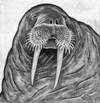
Walrus Rating: 7.5

Tuesday, May 26, 2009

Review of Celia

Coming-of-age stories set in 1950’s suburbia are a pretty tough sell for me, conjuring images of stuff like “Leave it to Beaver,” “Dennis the Menace” and “A Christmas Story” (Please don’t comment saying I’m off by a decade; I know.) that are colored by stale moralizing and contrived high jinks. Worst still are the creepy retrogressive utopias envisioned in such works as “The Family Circus” that yearn for a fictional past plastered with frozen smiles, bland conformity and frightening simplicity.

1950’s retrophelia aside, coming-of-age tales (or bildungsromans if you will) are just too often susceptible to white-washing nostalgia; a desire to see the childhood as a time of unproblematic innocence and maturing as a clear-cut linear progression. When depicting conflict, it is thus almost always externalized as a force opposing the fun-loving purity of the youth, like a bully, over-strict father or elderly crank (often a neighbor or teacher). “Celia” (1988) includes all three of these elements, but manages to energize the clichés by focusing more on the protagonist’s complicated internalized reactions, which are often times at odds with adult morality.

“Celia” (1988) takes place during Celia Carmichael’s ninth year, primarily during a summer in 1950’s Australia. Celia is an only child, whose natural assertiveness makes her the leader of group of neighborhood kids that develop an elaborate set of games and rituals. Her rampant imagination and initiative runs beyond the containment of her parents, deeply-flawed and sometimes brutish Ray and quiet, tentative Pat. They love her and try to raise her the best they know how, but their own failings and the vagaries of the era lead Celia through an emotional chaos that increasingly causes her to lose touch with reality.

There are two historical circumstances in particular that play a major role in the story. The first is the growing red scare in Australia, a particular preoccupation of Ray, who associates the threat with a wartime trauma (only hinted at) he experienced at a young age. Celia’s grandmother, whose death opens the film, was an ardent academic communist and has predisposed Celia to whimsical idealism, if not the actual theory and practice of Marxism. She’s much more interested in lying amidst her grandmother’s keepsakes and artifacts then actually reading the sizable book collection that Ray later burns.

[Image: Celia’s private rituals often echo her observations of the world around her. Ray’s bonfire of her grandmother’s Marxist books, for instance, has a warped reflection in one of Celia’s noturnal rites where she burns a makeshift effigy of her father.]

Ray has periods of calm between his misguided furies, but never really understands the emotional-spiritual connections that his daughter forms to things that seem of little consequence to him. The misunderstanding works both ways, prompting Celia to sometimes reject her parent’s instructions because she sees them as quite nonsensical.

Things are complicated by the arrival of the Tanners (Alice, Steve and their three children), friendly neighbors who are eventually revealed to be communist activists. The film being largely apolitical, this issue is of importance only to the extent that it affects Celia, who only vaguely comprehends the fuss that her parents make over it. Unlike the older Tanner boys, for instance, Celia doesn’t link Ray’s overkill reaction with his attraction to Alice. When Ray fulfills Celia’s long-held dream of owning a pet rabbit, in exchange for her promise to cease playing with the Tanner children, he inadvertently sets in motion a much greater tragedy than whatever he was trying to avoid.

[Images: Ray and Alice.]

Here enters the second unfortunate historical circumstance of note. In 1859, Thomas Austin imported some 24 rabbits into Australia saying, "The introduction of a few rabbits could do little harm and might provide a touch of home, in addition to a spot of hunting." By the 1950’s, rabbits had become a catastrophic plague, threatening to wipe out the country’s agriculture and provoking extreme responses from the government. One response was a law banning citizens from owning domestic rabbits. Celia is forced to take Murgatroyd to a crowded zoo pen where it can be kept while a grassroots campaign protests the absurdity of the law.

In the aftermath, Celia commits a shocking act of violence towards the man she holds responsible for her misery.

This last event triggered a great deal of mishandling over the course of the film’s minimal release history. The poster art and video releases attempted to market the film as an exploitation horror film along the lines of “The Bad Seed.” But the film shares more in common with films like “Valerie and Her Weeks of Wonders” (1970), “Paperhouse” (1988) and “Heavenly Creatures” (1994), where the theme of a young girl’s internal world spun dangerously out of control is treated sympathetically. Indeed, the ending of “Celia” may imply that our hero has even managed to productively overcome her crisis, though disturbing overtones and the continuation of the eerie soundtrack (incidentally, another highlight of the film) leave doubts.

Director Ann Turner does an admirable job rejecting the shortcut of villainy. What antagonists there are exist largely off screen (the Australian governor for instance) or are known to be acting in reasonably good faith. That’s something of a rarity in coming-of-age films since they are often expected to target children and so “must” be kept as black and white as possible. In “Celia,” the struggle over what’s best for her is more a conflict between Celia’s own intuitive, imaginative understanding of the world and the adults’ learned, systematic perspective.

Beyond Ann Turner’s excellent direction, it’s Rebecca Smart’s performance as the central character that make the film succeed. She handles the difficult balance of confidence and confusion that make Celia’s character interesting. She also manages to express Celia’s powerful surges of emotion and subtle habits (like her timid inability to lie when asked a question point blank or her heartbreakingly vulnerable attachment to her rabbit, spelled out most effectively merely in the way she carries it) with equal delicacy, while never overexposing what is an essentially enigmatic character. The 12 year old Smart ultimately gives a performance far better than many adult actresses ever achieve, and that’s coming from somewhere who frequently announces his hatred for child-actors to complete strangers.

“Celia’s” only distracting fault is in its somewhat dry presentation. Turner’s original script called for several sequences that were apparently cut or changed for budgetary reasons, but the story is largely unharmed by the modest variety of everyday settings. Turner shows a great deal of judgment in terms of knowing when to go in for a close-up and knowing when to back off, using her camera placement to impose a tinge of claustrophobia without making it too strong a metaphor for her character’s suffocation. However, her warm sun-clad sets want for a little more visual panache. The film’s moments of darkness, where Celia’s nightmares come alive, prove she’s clearly capable of more fantastical leanings, but I suppose her restraint is wise. By putting the emphasis on reality, the viewer is in the same position as her parents: we care about Celia, but our desire to pull her out of her private world may not be doing her a favor.

[Image: An abandoned quarry, one of Turner’s best a set pieces, manages to be both monumental and banal. The type of place where a child’s imagination runs wild.]

Walrus Rating: 8.5

The always-reliable Second Run UK released Celia on R2 DVD about two months ago. “Celia” has held a decent reputation in Europe, but very little following in the US due to unavailability, so I’ve been a bit lonely in my anticipation of this release. I’d flirted with the VHS and a very tattered bootleg for while, but this is a much cleaner print and comes highly recommended. With the clever cover art, essay insert and interview with the director on the Second Run release, I think the film is finally getting the treatment, and wider audience, it deserves.

Tuesday, January 27, 2009

Review of Grendel Grendel Grendel

A lot of people come up to me and ask, “Film Walrus, why aren’t there more 80’s-tastic Australian animated musical adaptations of 11th century Anglo-Saxon epic poems told from the villain’s point of view?” I usually get angry.

Now don’t get me wrong, I appreciate the sentiments behind this question, but I have little sympathy for such people. They had their chance back in 1981 with the release of Alexander Stitt’s “Grendel Grendel Grendel” and they failed to patronize or appreciate it. I, at least, have the excuse of not having been born yet.

“Grendel Grendel Grendel” is based on James Gardner 1971 novel “Grendel,” which I have not read. As far as I can tell, however, the film stays surprisingly true to the book despite its literary, philosophical and darkly satirical nature. In the story Grendel is portrayed as a misunderstood monster of great curiosity and depth who demonstrates far more humanity than the warmongering, superstitious and largely ignorant tribesmen of King Hrothgar’s mead hall.

[Image: Fire snakes.]

In the film, Grendel wanders in a state of supreme loneliness, unable to communicate with his mother, the only creature able to love him (as eloquently described in an early music number), nor with man or beast. Yet Grendel understands the words and songs of mankind, providing him insight into the rise of civilization and religion amongst the savages who alternatively fear and worship him. Grendel himself has a certain spiritual streak, too, that plays out through wistful soliloquies directed towards the silent heavens.

[Image: Grendel, on the verge of gobbling up a pair of sculptors, confronts his self-image in a carved idol.]

After struggling vainly with profound questions on the nature of reality, the curse of determinism and the meaning of life, Grendel gradually gives in to his role as a monster, an eternal anti-man, and regularly terrorizes the mead hall. The callous Beowulf shows up only in the last ten minutes of the film to mortally wound our tragic hero, who dies alone under the moonlight while calling out pitiably to his mother.

Given that the story includes human heads getting ripped off, nudity and a weighty philosophical discourse that culminates in the fatal and fatalistic failure of free will, one wouldn’t imagine this film would be a surefire winner with the kiddies. Just the same, the Day-Glo “Yellow Submarine” colors and peppy “Schoolhouse Rock” songs add a degree of child-friendly merriment to the otherwise doom laden parable on the futility of life. The dry offhand humor and knowing irony will appeal to adults.

[Image: Grendel’s mother in a rare appearance bearing down on Hrothgar.]

The project was evidently low budget and the animation is definitely not at the level of Disney or Pixar productions, but “Grendel x3” has a certain charm to its style (exceeding, say, just about anything from Dreamworks). The Danish characters tend to be short and squat like dwarves, but with long pointy noses. Grendel looks something like a polka-dotted dragon runt. The general lumpiness of these character designs didn’t particularly appeal to me and took some time to get used to, but I give Stitt credit for originality.

[Image: King Hrothgar with two loyal stooges.]

The film makes up lost ground with its high-contrast, supersaturated colors and clever limited-animation techniques. The style is characterized by strong angular lines and broad swaths of bold and sometimes lightly-textured color. It reminds me of the type of naïve childlike art you might magnet to a refrigerator or wallpaper around a cradle and I somehow don’t mean that in a condescending way.

No doubt a cost-saving measure, the use of cave drawings and silhouettes images nevertheless enhances the aura of a more primal era where darkness and savagery ruled.

The voice-acting is a blast, and not just because of the wealth of accents. The brilliant Peter Ustinov (“Billy Bud”) takes care of Grendel, and endows him with the the all-important personality and sympathy he needs, both of which aren’t quite achieved in the visuals. Unferth, Hrothgar’s scheming second-in-command, delivers his lines in a deep bass tone that fits his gruff pride perfectly. The real show-stealer however is Beowulf, whose calmly aloof drawl exudes an ironic sophistication and self-assurance that contrasts smartly with Grendel’s tentative musings and feeble excuses.

[Image: Legendary Viking warrior Beowulf, ever the stickler for proper dining etiquette, advises avoidance of the political and religious topics at the tavern table (for digestion’s sake).]

The music in “Grendel Grendel Grendel” isn’t quite good enough to become a cult hit in its own right, but the lyrics are catchy and simple enough to be likable for children and funny enough to be enjoyed by adults. One’s appreciation with likely depend on your tolerance for listening to omniscient dragon sages singing about Manichaeism and lilting folk-synth ballads describing Grendel’s horrifying features. Personally, I found it to be a well-suited mix of profound modernist absurdity and classical nursery rhymes.

Your unlikely to see “Grendel Grendel Grendel” at your local video vendors anytime soon (or ever), but I found it well worth the price I paid on Ebay (Stitt’s live-action “history of monsters” intro almost covered the cost alone). I can only hope that the spirit of risk-taking eccentricity that inspired its production will get reincarnated in other projects.

Walrus Rating: 7.5

Saturday, August 2, 2008

Iceberg Arena: Demolition Derby at the Drive-In

The Cars That Ate Paris (1974) vs Death Race 2000 (1975)

[Images: Start your engines: (Top) The Cars That Ate Paris and (Bottom) Death Race 2000.]

The Film Walrus does not like cars. American society has explained to me in detail how patently uncool that is, but I remain uninterested. While I do consider transportation a necessary and important aspect of life, I find driving tedious, fuel expensive and the pollution excessive. For me, a vehicle is just a means to an ends; an expensive convenience bankrupt of the technical fascination, status symbolism and sex appeal attributed to it by car enthusiasts the world over.

So it should come as no surprise that I have zero use for NASCAR racing on TV and very little special love for the long tradition of gearhead road movies. I’m frequently left unimpressed by such “classic” car films as “American Graffiti,” “Two-Lane Blacktop,” “Smokey and the Bandit,” “Gumball Rally,” “The Cannonball Run” and “Christine.” With the brilliant “WALL-E” still fresh on my mind, I’ve even had several discussions about “Cars” being the weakest link in Pixar’s collection.

There are occasional exceptions. I think “Bullitt” and “The Driver” are fine films. Many road movies with more on their mind than the vehicle worship have earned my appreciation: “Thelma and Louise,” “Until the End of the World,” “Wild Strawberries,” etc. I love the way Godard exploits the auto as symbol of civilization in “Weekend” and, of course, there’s Alex Cox’s unusual auto mythology in “Repo Man.” I even like Spielberg’s “Duel,” a surprisingly lean and effective mini-epic on the frustration and danger I associate with driving.

Today’s Iceberg Arena is about two car movies from the subgenre’s heyday: the 1970’s. My choice of combatants reflects my rather unromantic view of cars. Driving hostility may also contribute to my enjoyment of “The Cars That Ate Paris” (1974) and “Death Race 2000” (1975), both films that satirize and revel in the violence and selfishness characteristic of the age of speed.

Incidently, Roger Corman distributed both pictures, though he directed neither. “The Cars That Ate People” was the theatrical debut for director Peter Weir (whose “Picnic at Hanging Rock” was in a previous Iceberg Arena). It met a weak reception in its native Australia, and Corman’s New World Pictures recut the film (and retitled it to the even more misleading “The Cars That Ate People”) for its minimal American release, ensuring a poor box office here as well. Corman did extract out some of the best themes and farmed them out to Paul Bartel (“Eating Raoul”), who upscaled the scope to a transnational road race for “Death Race 2000” and helped pave the way for consumer-friendly vehicles like the “Cannonball” and “Gumball Rally” films.

The Cars That Ate Paris

[Image: Our first contender gears up for the showdown.]

Arthur and his brothers are unemployed drifters, towing their modest possessions from place to place and trying to find a community to settle in. Arthur is planted forever in the passenger seat due to a vehicular manslaughter charge years back, so it’s his brother George at the wheel during a nighttime car crash in the Australian countryside. He wakes up in the tiny town of Paris (see “Paris, Texas” for another films involving non-France Parises) where he learns that his brother is dead and all his belonging have been consumed in fire. Timid and passive, Arthur is harassed by the local psychiatrist and talked into staying on with the suspicious mayor. Even as he begins to regard the town as his home, he senses its dark secrets and generation-gap friction.

“The Cars That Ate Paris” opens with a glamorous young couple speeding over winding country roads in their sparkling corvette. The scene is set to a spritely synth tune and runs like a bad commercial (intentionally) only to terminate in a fatal car crash. The tone is set, and will be maintained at a level of casual weirdness for the duration, but the plot is much harder to get a handle on.

[Image: A shot from Weir’s hilariously prescient product-placement plastered intro.]

At first, one assumes that the town Arthur is stranded in must be a typical locus of homicidal evil as films like “Two Thousand Maniacs” and “The Wicker Man” have taught us to expect the moment a secluded village offers conspicuous hospitality and rapacious smiles. But it’s not so easy. Paris seems almost pathetic; an economically depressed and obsessively isolated community with a guilty conscience, a “youth problem” and a very thin veneer of quaint civility over its powder keg of contradictions. The mayor and his family seem genuinely grateful for Arthur’s arrival, and welcome him into their family with a desperation that is almost disarming.

Lacking the pure horror that the title implies (this is more dark comedy than supernatural monster movie), it must have been difficult to market “The Cars That Ate Paris.” The poster features a string of questions “Where exactly is Paris? What kind of people live there? What are they trying to hide? Why do cars mean so much to them?” in lieu of a tagline. Even Weir seems frequently undecided about where he is going with the plot and tries to get curiosity to cover poor pacing during the uneventful first half.

Still, there’s something gutsy about eschewing big scares and sudden revelations. The unusual atmosphere and generous sympathy on display creates a movie relatively free of genre deadweight, but still capable of unsettling and amusing the audience. Though the rewards may be too slight for typical horror fans, the idiosyncratic characters help bring out the acquired charms of such a strange brew.

Weir’s quiet, slouching, unmotivated hero is a surprisingly realistic portrayal of a shy drifter almost embarrassed to be witnessing a local conspiracy. He gets to play the mildly likable straight man to the town’s eccentric personalities. The mayor is a beautifully accurate father figure, whose brand of benevolent fascism makes a great allegory for the way conservative leaders trying to “focus on family” and “overcome adversity” can remain blind to the way their compromises and corruptions poison the next generation. The local youth, a gang of inarticulate anarchists who crash luridly-painted spike-festooned cars for fun, makes a humorously polar-opposite contrast to the repressed villagers.

[Image: The mayor.]

My favorite character has to be the underused psychiatrist, who introductory speech includes the ominous, “You know, it’s really outside the cities where psychiatry has the freedom to experiment.” He forces Arthur to undergo a series of tests immediately after his car accident. The doctor presents photos and Arthur just says the name of the object he is looking at. The pictures are mostly neutral images like Cat and House interspersed abruptly with forensic snapshots of the crash site where George’s bloody corpse lies amongst the twisted metal. It’s sick, but so inappropriate that it’s funny. The same goes double for the film’s climactic Pioneer Day costume ball, where the doctor shepherds in his lobotomized patients dressed tastelessly as vegetables and robots.

[Image: Mental patients at the Pioneer Day costume ball.]

[Spoilers]
The truth about Paris is almost anti-climactic after all the insinuations and tension, but it has an uncharacteristic ring of melancholy realism to it. The town, having fallen on hard times, uses their intentionally ill-maintained roads (and other methods) to induce crashes. They then loot the bodies, the cargo and the cars, burning the remains and telling investigators that everything perished in the fire. The isolationist attitude of the town discourages nosy outsiders.

[Images: Never trust anyone who has enough Janguar hood ornaments that they can assemble a wind chime.]

The sense of economic necessity and emotional vulnerability that Weir gives the townspeople keeps them from being faceless evils. The mayor may be monstrously unethical, but there is something deeply human about his desire to induct crash survivors into his family. We eventually learn that his wife can’t have children and that their two daughters are adopted. A covered scar on one of the girls cues us to what happened to the original parents. Likewise, Arthur finds himself slipping into the role of the son the mayor never had.

“The Cars That Ate Paris” is most effective in the way it warps traditionally sanctioned institutions like family (similar to “The Texas Chainsaw Massacre” or “The Hills Have Eyes”) and community (again, like “Two Thousand Maniacs” and “The Wicker Man”). While this is nothing new to the horror genre, the sensitivity for folks “just trying to make a living” is unusual.

Since the livelihood of the locals is so enmeshed with autos, it is fitting that their demise should also be predicated on them. There is also a sense of justice that their comeuppance should be administered by their own offspring (members of family and community) rather than the stranger from the outside world as in most stories. One can thus read the finale – where the cars finally “eat” Paris – as either a critique of technological dependence (here in the form of automotive carrion-feeding) or as a fable about the dangers of repression and hypocrisy.
[/Spoilers]

Death Race 2000

[Image: Our second candidate makes his pitch.]

Paul Bartel’s 1975 cult hit revs a much louder engine, with the comedy and action more sustained and expressive. It takes place in a future America run by the fascist Mr. President where blood-drenched TV spectacles are used as an opiate for the oppressed masses. The most popular event is the Transcontinental Road Race, where contestants drive from New York to L.A., scoring points by running people over with bonuses for women, children and the elderly.

The line-up includes battle-weary cyborg and popular favorite Frankenstein (David Carradine), “Machine-Gun” Joe Viterbo (Sylvester Stallone), Calamity Jane (Mary Woronov), Matilda the Hun and Nero the Hero. Each rides a themed vehicle with a navigator/mechanic in the passenger seat. The story is told from the perspective of Frankenstein and his new navigator Annie Smith both of whom are falling in love even as they struggle to mask their real identities: Annie is the daughter of violent anti-race revolutionary Thomasina Paine and Frankenstein is a discontent pawn who plans to assassinate the President with a literal “hand” grenade.

[Images: (Top) Frankenstein’s reptilian ride and (Bottom) Joe Viterbo firing into the stands at anyone cheering for his rivals.]

A narrator is provided in the form of Junior Bruce (real-life DJ Don Steele), a flamboyant announcer who gushes and thrills over every development, whether it’s a contestant taking an unexpected route or the murder of an unwary pedestrian. His manic commentary is itself an exaggerated commentary on the media in general, perhaps the primary target of “Death Race’s” satire. Sports, America, France, Germany, religion and celebrity worship are also fair game as far as the movie is concerned, but the glorification of violence in the media and the sensationalism of the news take the hardest beating, albeit by a film that both glorifies and sensationalizes violence.

“Death Race” may be too determined to entertain to sincerely back its indictments, but its no-holds impertinence makes it a wilder and more engaging film than “The Cars That Ate Paris.” The comedy is just as dark, with humor that encompasses Matilda the Hun spouting Nazi rhetoric catchphrases, Nero the Hero lamenting that Boy Scouts run too fast, Joe Viterbo scoring points by running over his own pit crew and Frankenstein slaughtering the staff of a geriatrics hospital rather than their sacrificial offer of elderly patients. It might not sound funny, but Bartel’s uninhibited direction makes it perfect cult material.

[Image: Director Paul Bartel’s uncredited cameo.]

The film’s low budget is often masked by the exotically decorated cars and the effective driving photography, which had a major influence on later films. The interiors are less convincing, with the sparsely furnished “hotel rooms” clearly set in a warehouse.

[Image: Note the double doors (complete with “EXIT” sign) and conspicuously high ceiling in this rather unlikely “hotel room.”]

A low-budget may even aid the atmosphere. The themed costumes and bad hair, for instance are kitschy fun in themselves. Then set the whole thing in a dystopic future full of quotable near-non-sequiturs like, “You know Myra, some people might think you're cute. But me, I think you're one very large baked potato.” and you’ve got yourself a vintage throwback to the 1970’s. Ultimately it is the imaginative wackiness of the plot and the universal cast commitment to their distinctive characters that provide the finishing touch.

[Images: Simone Griffith plays love interest and rebel agent Annie Smith. News personality Grace Pander, who refers to every celebrity as “a great, dear friend of mine,” introduces her to Frankenstein as a “red-hot sexpot.” “She better be a red-hot navigator,” he replies. In this case, everybody wins.]
Both films have very different goals in how they handle their characters and tone. “The Cars That Ate Paris” gives us unconventionally sympathetic villains with arguably understated performances while “Death Race 2000” stocks its roster with conspicuously ruthless heroes famous for their insanely over-the-top conduct. There’s something richer and more meaningful in Weir’s measured deconstruction of a rural community, but I’d rather watch Bartel’s wanton destruction of urban society.

Winner: Death Race 2000

[Image: Anyone who says this movie has too much shirtless David Carradine is no friend of mine.]